Mastering the Low FODMAP Reintroduction Phase: A Step-by-Step Guide
Feeling overwhelmed by the low FODMAP reintroduction phase? I'm here to show you how this step-by-step process can bring you true food freedom and help you understand your unique body.
Finding Your Food Freedom: Mastering the Low FODMAP Reintroduction Phase
If you've spent weeks on the low FODMAP elimination phase, you know it can feel like a big sigh of relief when symptoms calm down. But then, a new kind of anxiety can creep in: What happens next? It's totally normal to feel a little overwhelmed or even scared about bringing foods back. You're not alone in wondering how to navigate this crucial next step, but I've got some good news for you: the reintroduction phase is where you start to reclaim your food freedom.
This isn't about guesswork; it's a careful, empowering process to understand your unique body. Let's walk through how to approach the low FODMAP reintroduction phase strategy so you can build a diet that feels good and nourishes you.
Why the Reintroduction Phase Is Your Key to Long-Term Comfort
You've done the hard work of the elimination phase, diligently avoiding high-FODMAP foods to calm your digestive system. That's a huge accomplishment! But here's the thing: the low FODMAP diet isn't meant to be forever. As research out of Monash University reminds us, it's a temporary tool, designed to help you pinpoint your specific triggers.
The reintroduction phase is where the real magic happens. It's your personal detective work, systematically testing each FODMAP group to discover what you can tolerate and in what amounts. Think of it as building your very own food blueprint, so you're not unnecessarily restricting delicious and nutritious foods in the long run. It's about expanding your diet, not shrinking it!
Getting Ready: Your Reintroduction Toolkit
Before you dive into testing, let's make sure you're set up for success. You'll want to be feeling pretty good symptom-wise; if your symptoms are still flaring, it might be a good idea to chat with your healthcare provider or dietitian before starting. Here's what else you'll need:
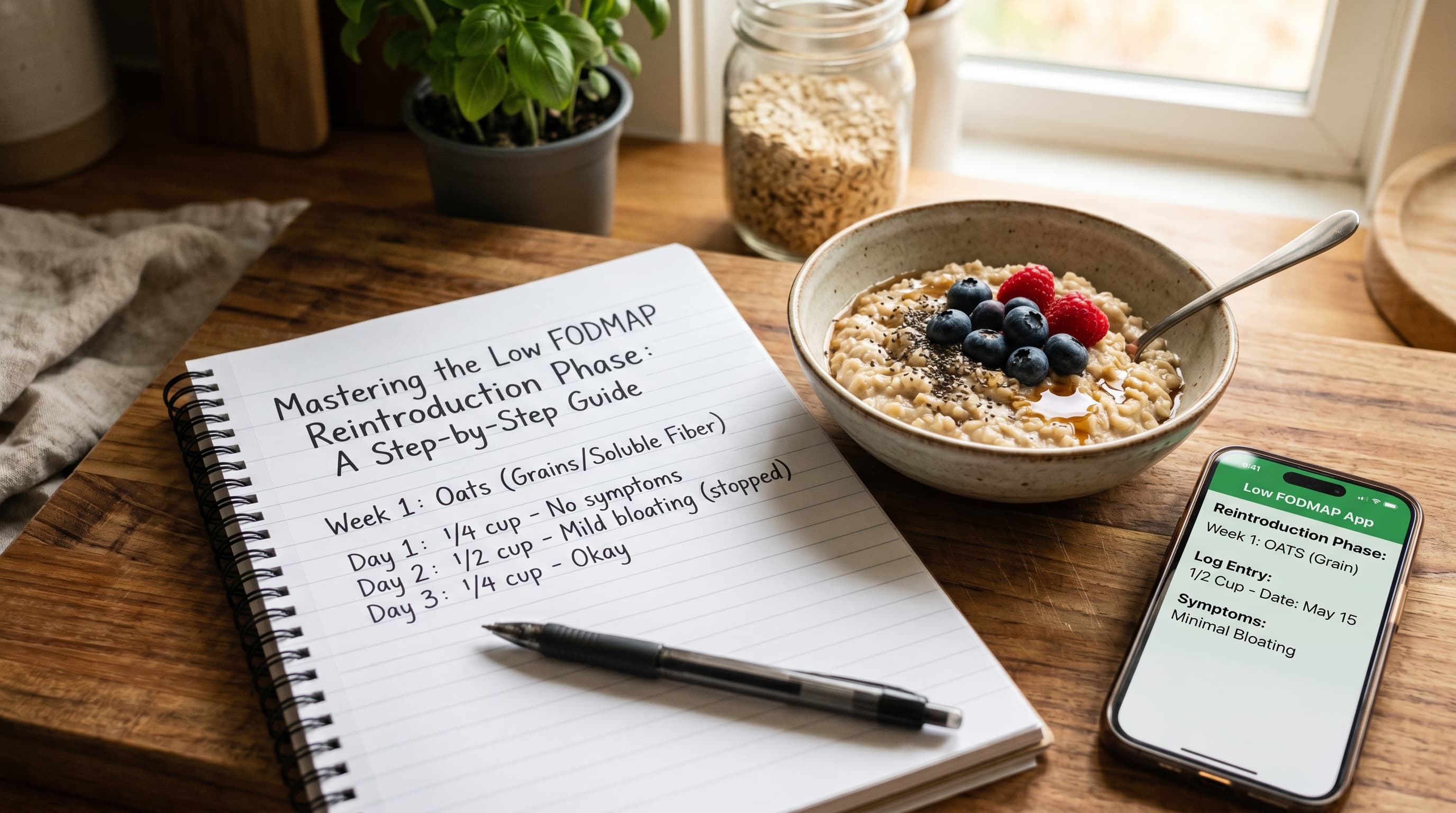
- A Food & Symptom Journal: This is your best friend during reintroduction. You'll want to track everything you eat, the specific FODMAP you're testing, the portion size, and any symptoms you experience.
- Patience and a Clear Schedule: Each test takes a few days, so pick a time when you don't have major events or stressors that could mask symptoms.
- The Monash University Low FODMAP App: This app is invaluable for checking FODMAP content and serving sizes for challenge foods.
Your Step-by-Step Low FODMAP Reintroduction Phase Strategy
The reintroduction phase involves testing each of the six major FODMAP groups one by one: Fructans, GOS (Galactooligosaccharides), Lactose, Excess Fructose, Sorbitol, and Mannitol. You're trying to find your personal threshold for each group.
H3: Testing a Single FODMAP Group
This is where your detective hat comes on! You'll pick one FODMAP group to test and select a food that contains *only* that FODMAP (or primarily that FODMAP). Here's a general approach:
- Choose Your First FODMAP: Many people start with a common one like Lactose or Fructans.
- Select a Challenge Food: For example, if you're testing Lactose, you might choose milk or yogurt. If it's Fructans, perhaps a small piece of wheat bread or a few cashews.
- The "Increasing Dose" Approach: Over 3 days, you'll eat increasing amounts of your chosen challenge food.
- Day 1: A small portion (e.g., ½ slice of bread for fructans, ½ cup milk for lactose).
- Day 2: A moderate portion (e.g., 1 slice of bread, 1 cup milk).
- Day 3: A larger portion (e.g., 2 slices of bread, 1.5 cups milk).
- Symptom Monitoring: After each day's challenge, you'll monitor for symptoms for the next 24-48 hours. Keep your journal handy!
- Rest Period: After your 3 days of testing, take 2-3 days off, returning to your strict low FODMAP diet, before moving on to the next FODMAP group. This ensures any lingering symptoms clear up before you introduce a new variable.
H3: Interpreting Your Results
Your journal is going to be incredibly helpful here. You're looking for symptoms like bloating, pain, gas, nausea, or changes in bowel habits. Rate them on a scale (0-10) to help you track severity.
- Pass (No Symptoms): Wonderful! You can eat this FODMAP group freely at the tested portions.
- Mild Symptoms: This suggests partial tolerance. You might be able to enjoy smaller portions of this FODMAP. Make a note of your threshold.
- Moderate/Severe Symptoms: This indicates a trigger FODMAP for you. It's best to avoid or strictly limit this group for now. Don't worry, you can always retest in a few months!
- Delayed Symptoms: Sometimes, symptoms don't show up immediately. If you experience them 24-48 hours later, it's still considered a trigger.
Remember, your body's response isn't always black and white. You might tolerate ½ cup of chickpeas but not a full cup. Also, you could be sensitive to fructans from wheat but perfectly fine with fructans from garlic – it's all about individual thresholds and mixed results.
H3: What If Symptoms Happen?
It's okay! This is part of the process. If you get symptoms, stop testing that FODMAP group immediately and return to your strict low FODMAP diet until you feel better. Once symptoms subside, you can either retest that group with a smaller portion or move on to a different FODMAP group.
Beyond the Basics: Stacking and Personalization
Once you've systematically tested all six FODMAP groups, you'll have a much clearer picture of your individual triggers and tolerances. But the journey doesn't stop there!
H3: Stacking Tolerated Foods
In real life, we don't usually eat just one FODMAP at a time. This is where **stacking** comes in. If you've passed several FODMAP groups, you can start testing them together. For instance, if you tolerated a certain amount of wheat bread (fructans) and milk (lactose) separately, try having both in one meal. This helps you understand if the combined FODMAPs exceed your personal threshold. It's a great way to mimic everyday eating patterns and really cement your understanding of your body's limits.
H3: Moving into Your Personalization Phase
After all your reintroduction and stacking tests, you'll have a personalized list of "safe foods" and "avoid foods," along with your unique threshold amounts. This is called the **Personalization Phase**. This means you can confidently reintroduce foods you passed, knowing what portions work for you. It's about finding a balanced, varied diet that manages your symptoms without unnecessary restrictions.
Practical Takeaways for Your Kitchen and Beyond
This entire process is about empowering you to eat well and live comfortably. Here's how you can weave this new knowledge into your daily life:
- Embrace Variety: With your new understanding, you can start incorporating a wider range of foods back into your diet. This isn't just about enjoyment; it's crucial for getting all the nutrients your body needs. When we restrict foods, we sometimes risk missing out on important micronutrients.
- Smart Pantry Management: Think of your pantry as your personal "Bioavailability Matrix". Stock it with foods you know you tolerate, and be mindful of how different ingredients interact. For example, if you know you're sensitive to fructans, you might keep garlic-infused oil on hand instead of fresh garlic.
- Meal Planning with Confidence: Now that you know your triggers, meal planning becomes so much easier. You can confidently choose recipes that fit your personalized needs. GentleFeast recipes, like our Low FODMAP Korean-Style Lean Pork & Bamboo Shoot Stir-fry or the Japanese Chicken & Egg Rice Bowl, are designed with low FODMAP principles in mind, making them perfect starting points for building meals around your tolerated ingredients. Even our Low FODMAP Vietnamese-Inspired Chicken & Rice Noodle Soup can be a comforting option once you've identified your specific tolerances for ingredients like carrots or green beans.
- Listen to Your Body: Your body is constantly communicating with you. As your gut heals, your tolerances might even change over time. It's always a good idea to recheck your tolerance for certain foods every few months.
You've Got This!
Navigating the low FODMAP reintroduction phase can feel like a journey, but it's one that leads to incredible freedom and understanding of your body. You're building a personalized eating plan that supports your digestive health and allows you to enjoy food again without fear. Celebrate every small victory, be kind to yourself on the challenging days, and remember that every step is bringing you closer to true food peace. Take that first step today: grab a journal and start planning your first reintroduction test!
Which foods are behind your symptoms?
A free 60-second check to help you narrow it down — plus recipes matched to what works for your body.
Find my food triggers