Your Essential Low FODMAP Grocery List and Smart Shopping Tips
Feeling lost in the grocery store on a low FODMAP diet? I've got your back! Discover my essential low FODMAP grocery list and smart shopping tips to make your journey easier and more delicious.
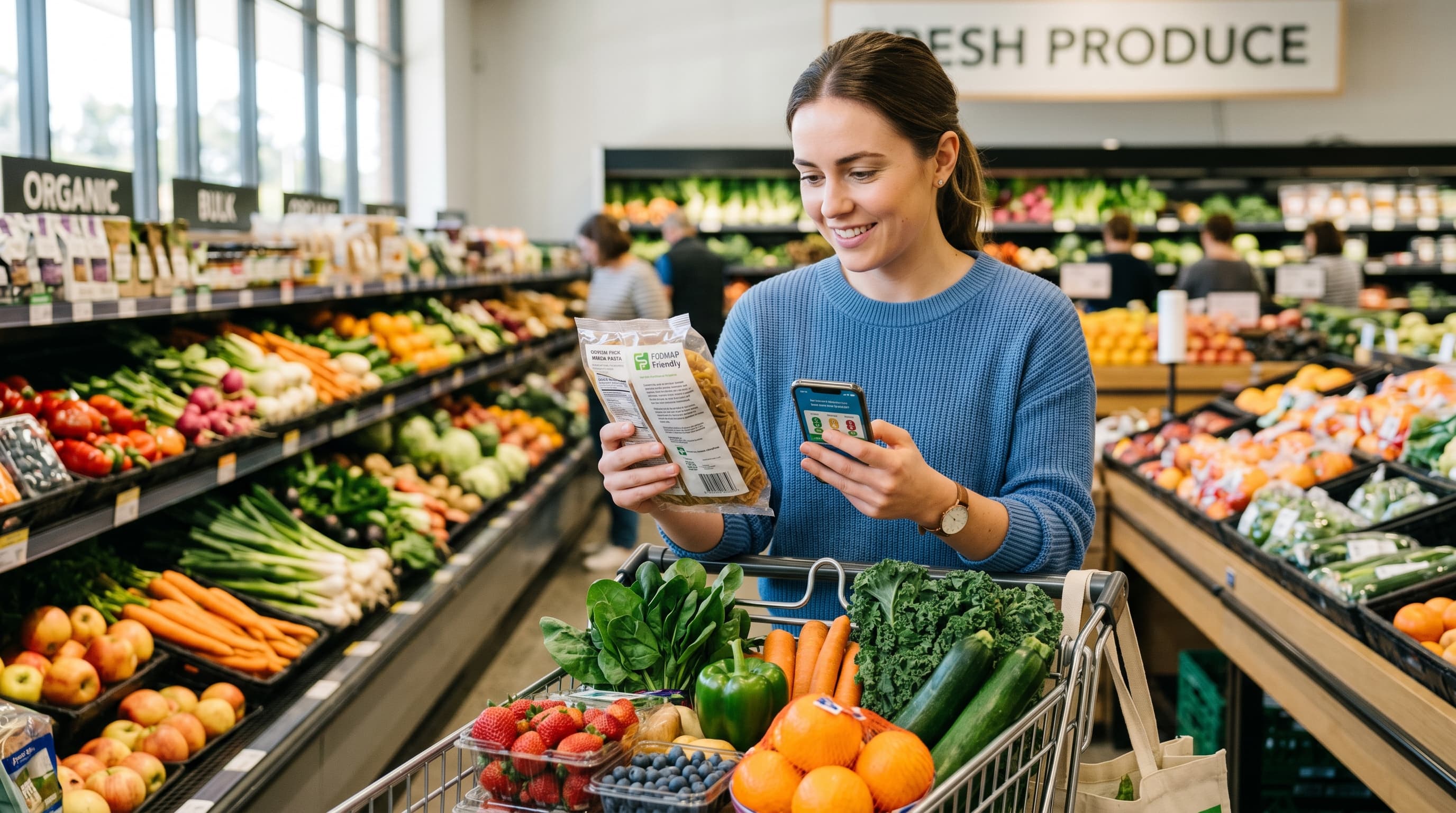
Let's make your next shop a little simpler. I've pulled together a starter low FODMAP grocery list: plain chicken or eggs, rice or quinoa, carrots or kiwi, and lactose-free milk. Check serving sizes in the Monash app and read labels; gluten-free doesn't automatically mean low FODMAP. Your own tolerances still matter.
Your starter shopping list
| Category | Starter choices | What to check |
|---|---|---|
| Protein | Plain chicken or eggs | Check added seasonings for garlic or onion. |
| Grains | Rice or quinoa | Check serving sizes in the Monash app. |
| Produce | Carrots or kiwi | Check Monash serving sizes and your own tolerance. |
| Dairy | Lactose-free milk | Check the label for other ingredients. |
These starting choices also appear in Monash University's low FODMAP shopping list. Adapt them to your allergies and any other dietary restrictions.
Understanding your low FODMAP journey
The low FODMAP diet has three stages: a temporary restriction phase, reintroduction, and personalization. Monash recommends working with a trained dietitian to follow those stages and find a longer-term eating pattern that suits you.
The first phase usually lasts 2–6 weeks. It isn't meant to become a permanent list of foods you can never eat. Your dietitian can help you decide what comes next.
I'd keep the Monash University FODMAP Diet App close when planning meals. Its food guide shows tested serving sizes, which are more useful than a simple yes-or-no food list.
Your Low FODMAP Superpowers: Portion Sizes and Label Reading
One of the biggest "aha!" moments on a low FODMAP journey is understanding that a food's FODMAP content isn't always black and white. It's often about portion size! Check the specific food and serving in the Monash app rather than guessing from descriptions like "a handful" or "a bowl." It helps you see which portions fit the stage of the diet you're following.
Another superpower you'll develop is becoming a master label reader. High-FODMAP ingredients can hide in unexpected places, especially in processed foods. Always keep an eye out for sneaky culprits like:
- Onion powder
- Garlic powder
- High-fructose corn syrup
- Inulin or chicory root (often in "fiber-added" products)
Even products labeled "gluten-free" aren't automatically low FODMAP, so checking every ingredient list is a must. It might feel like a lot at first, but I promise, it gets easier and faster with practice!
Building Your Low FODMAP Grocery List: The Staples
Let's get down to the good stuff – what actually goes into your cart! Here's a breakdown of low-FODMAP staples you can confidently stock up on. Remember, these are general guidelines, and the Monash app will give you the most precise, up-to-date info on serving sizes.
Proteins: Your Tummy-Friendly Foundation
Most plain, unprocessed proteins are naturally FODMAP-free, which is wonderful! They're your reliable go-to for satisfying meals.
- Meats: Plain chicken, turkey, beef, pork, lamb.
- Fish & Seafood: Salmon, cod, shrimp, scallops, tuna (canned in water or oil).
- Eggs: A versatile and easy protein source.
A little caution here: Watch out for processed meats like sausages, deli slices, or pre-marinated items. They often contain hidden garlic or onion, so always check those labels!
Grains and starches: check the product and portion
Rice, quinoa, rolled oats, and potatoes give you useful places to start. Check the Monash app for the serving you plan to eat.
- Rice or quinoa: Choose plain versions and check any added seasoning.
- Rolled oats and potatoes: Check the specific food and portion rather than assuming any amount will fit.
- Bread, pasta, and noodles: Compare the ingredients and app entry. A gluten-free label alone doesn't tell you whether a product is low FODMAP.
- Sourdough: Check the specific bread and serving. The word "sourdough" on a label isn't enough to make the choice for you.
Fruit: choose the serving before filling the bowl
You don't have to give up all fruit. Monash's starter list includes kiwi, firm bananas, pineapple, oranges, mandarins, strawberries, blueberries, and raspberries. Use the app to check the serving for each one.
Ripeness, variety, and portion can matter. If you're unsure about a fruit, look up its current entry rather than relying on a blanket "eat" or "avoid" list.
Vegetables: variety and portion matter
Carrots, lettuce, spinach, bok choy, potatoes, and green bell pepper appear in Monash's starter shopping list. So do red or white cabbage and oyster mushrooms, which shows why ruling out every cabbage or mushroom can be misleading.
Check the specific variety and serving in the app, including foods such as Brussels sprouts and other mushrooms. A listed option still needs to fit your portion, allergies, and individual plan.
Dairy and alternatives: look at lactose and serving size
Lactose is the FODMAP in dairy. Lactose-free milk and yogurt can be useful starting choices, but low lactose doesn't mean suitable for someone with a milk allergy. Follow your allergy plan separately.
- Cheese: Check lactose content and the serving rather than texture alone. Monash's lactose guide includes cheddar, feta, and brie among its low-lactose examples; brie and feta shouldn't be grouped under a "hard cheeses" heading.
- Ricotta and cottage cheese: Check the product and serving in the app instead of treating every portion as off-limits.
- Plant-based milk: Check the ingredients and the app entry for that type of milk. Different products aren't interchangeable.
Monash explains the difference between lactose intolerance and dairy allergy, and why dairy choices depend on the amount of lactose in a serving.
Fats, oils, and flavor: read the whole label
Plain oils and carefully chosen seasonings can help keep meals interesting. Check spice blends, sauces, and sweeteners for added ingredients and the serving you plan to use.
Garlic-infused oil is one option. Monash explains that garlic and onion fructans dissolve in water, rather than oil. Removing garlic from a watery soup doesn't remove the fructans that have already moved into the liquid.
For an easier shopping choice, look for a tested low-FODMAP infused oil and follow its label. If you make an infusion, remove the solids and follow Health Canada's preparation and storage guidance. Never store homemade garlic or herbs in oil at room temperature.
Smart Shopping Strategies for Success
Now that you know what to buy, let's talk about how to shop smart to make your life easier.
1. Plan Your Meals (and Your List!)
This is probably the most impactful tip. Before you even leave the house, plan out your meals for the week. This helps you create a targeted grocery list, reduces impulse buys of high-FODMAP foods, and saves you time and money. It's truly a win-win-win!
2. Shop the Perimeter First
The outer aisles of the grocery store are usually where you'll find the freshest, unprocessed foods: produce, meats, dairy, and eggs. These are your low-FODMAP superstars. Head there first to fill up your cart before venturing into the inner aisles.
3. Don't Be Afraid to Ask
If you're unsure about ingredients in something at the deli counter or butcher shop, politely ask! Store employees are often happy to help, or you can always opt for plain, whole ingredients you can prepare yourself.
4. Embrace Online Shopping or Curbside Pickup
If label reading in the store feels overwhelming, consider using online grocery services. You can often filter by dietary needs, and it gives you more time to scrutinize ingredient lists from the comfort of your home without feeling rushed.
Putting It All Together: Your Practical Low FODMAP Shopping Guide
Let's boil it down to a quick checklist you can use next time you're heading to the store:
- Monash App Ready: Keep the app handy when you shop.
- Meal Plan in Hand: Know what you're cooking for the week.
- Targeted Grocery List: Stick to your low-FODMAP plan.
- Perimeter Power: Focus on fresh produce, lean proteins, and lactose-free dairy.
- Label Detective Hat On: Check for hidden garlic, onion, and high-fructose corn syrup in packaged goods.
- Flavor Savvy: Choose a tested infused oil or seasonings whose ingredients and servings fit your plan.
Remember, this elimination phase is temporary, and it's all about gathering information for your body. You're doing incredible work learning what makes you feel your best!
Taking control of your grocery shopping is a huge step in feeling more empowered on your low FODMAP journey. Don't feel like you have to be perfect from day one. Just pick one meal to plan for this week, make your list, and head to the store with confidence. You've got this, and I'm cheering you on every step of the way!
Which foods are behind your symptoms?
A free 60-second check to help you narrow it down — plus recipes matched to what works for your body.
Take the quiz