The Ultimate Guide to the Low FODMAP Diet for Digestive Wellness
Feeling lost and frustrated with digestive issues? I'll walk you through the low FODMAP diet, a powerful tool for identifying your triggers and finding long-term relief.
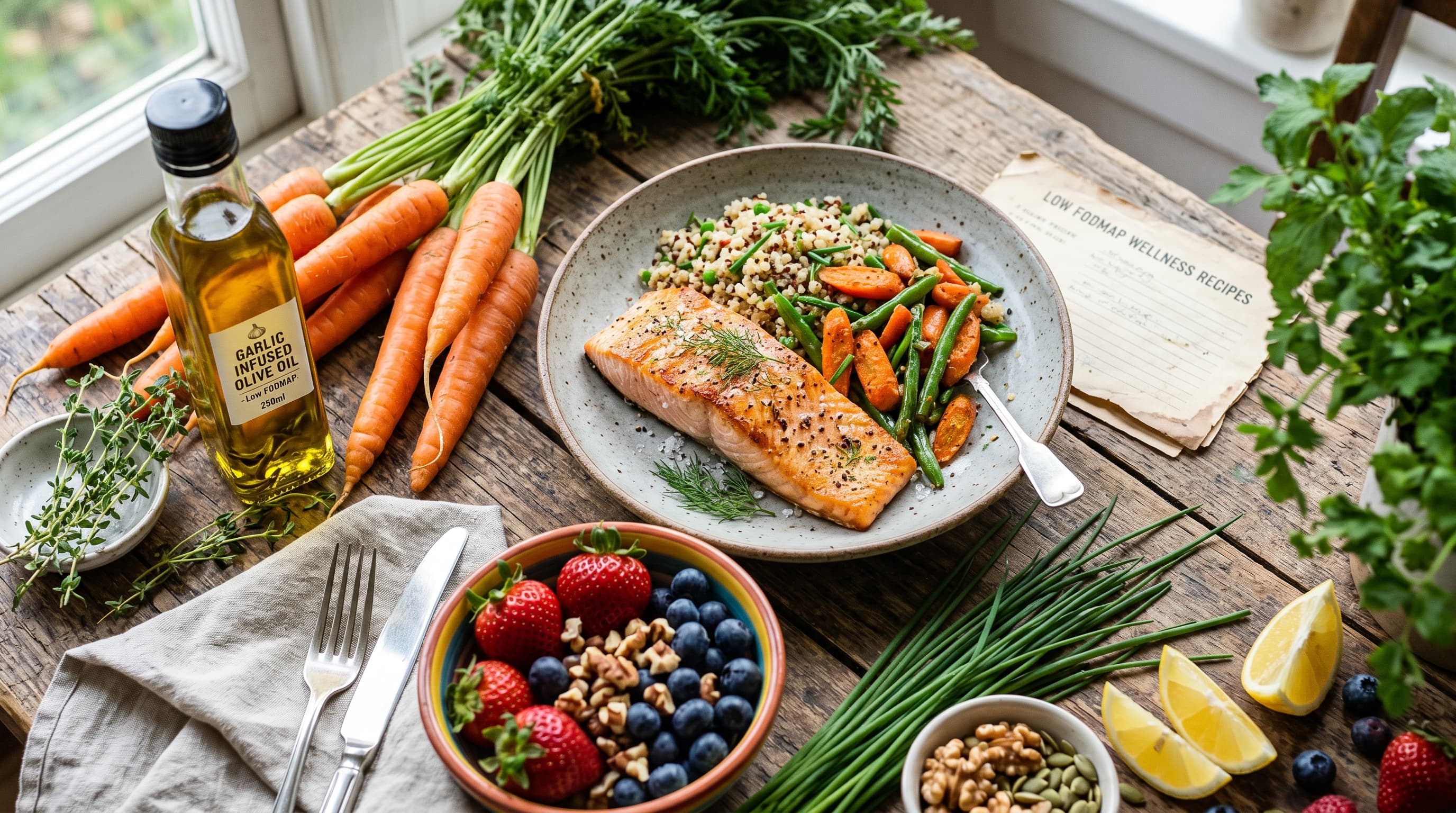
The ultimate guide to the low FODMAP diet for digestive wellness
If you're here, chances are you've had your share of days derailed by digestive drama. The bloating, the pain, the unpredictable dashes to the bathroom—it's exhausting, and it can make you feel like your own body is a mystery you can't solve. I want you to know you're not alone in this, and there's so much hope for feeling better. Let me walk you through one of the most effective tools we have for understanding digestive distress: the low FODMAP diet.
So, what in the world are FODMAPs?
I know, it sounds like a weird tech term, not something you'd find in your food. But I promise, it's simpler than it seems. FODMAP is just an acronym that stands for a group of short-chain carbohydrates (sugars and fibers) that can be tough for some people to digest.
Think of them as fast food for your gut bacteria. For many people, this is a good thing! But in a sensitive gut, this fast-food feast can lead to a whole lot of trouble. The name itself gives us the clues:
- Fermentable: Your gut bacteria gobble them up and produce gas.
- Oligosaccharides: These are fructans (found in wheat, onions, garlic) and GOS (in beans and lentils).
- Disaccharides: This is mainly lactose, the sugar in dairy products like milk and soft cheese.
- Monosaccharides: This refers to excess fructose, the sugar found in fruits like apples, mangoes, and in honey.
- And Polyols: These are sugar alcohols like sorbitol and mannitol, found in some fruits and veggies (like mushrooms and cauliflower) and often used as artificial sweeteners.
It's really important to hear this: FODMAPs are not bad. They're found in tons of healthy, wonderful foods. The issue isn't with the foods themselves, but with how a specific, sensitive gut responds to them. This isn't about good foods vs. bad foods; it's about finding *your* foods.
Why this diet can be a game-changer for a sensitive gut
When you have a sensitive gut, often associated with Irritable Bowel Syndrome (IBS), FODMAPs can trigger symptoms in two main ways. Understanding this was a huge 'aha' moment for me, and I think it will be for you, too.
First, they're osmotic, which is a science-y way of saying they draw extra water into your small intestine as they pass through. This rush of water can lead to cramping, pain, and diarrhea. It's a purely physical reaction, like a sponge pulling in water.
Second, because they're poorly absorbed in the small intestine, they continue their journey down to the large intestine mostly intact. Here, your gut bacteria are waiting, and they have a party! They rapidly ferment these FODMAPs, and the byproduct of this fermentation is gas. Lots of it. This gas stretches the walls of your intestines, which can cause significant bloating, pressure, and pain.
The low FODMAP diet, which was developed by a brilliant team of researchers at Monash University in Australia, is designed to temporarily reduce these effects. By lowering your intake of these fermentable carbs, you give your gut a chance to calm down, breaking the cycle of symptoms. The research is compelling, with many people experiencing significant relief. But it's also important to know that it doesn't work for everyone—some studies show that about 25% of people with IBS might not see a benefit. This isn't a failure, it's just information that helps you and your doctor decide on the next best step for you.
The three-phase journey to finding your food freedom
This is the most important part to understand: the low FODMAP diet is *not* a forever diet. It's a temporary learning process, a structured journey in three distinct phases. The ultimate goal is to eat the most varied, delicious, and nutrient-rich diet that doesn't trigger your symptoms.
Phase 1: The Elimination Phase (about 2-6 weeks)
This is the strictest phase, where you'll temporarily remove all high-FODMAP foods from your diet. I know that sounds daunting, but think of it as pressing a reset button for your gut. The goal here is to calm everything down and get your symptoms to a stable, comfortable baseline. It's like quieting a noisy room so you can finally hear a whisper.
During this phase, you'll focus on all the wonderful foods you *can* have. It's a short-term investment for long-term relief. Most people start to feel a significant improvement within the first couple of weeks, which can be incredibly motivating!
Phase 2: The Reintroduction Phase (about 6-8 weeks)
Once your symptoms have calmed down, the real detective work begins! This is where you systematically reintroduce FODMAPs, one group at a time, to figure out exactly which ones are your personal triggers and how much of them you can handle. This phase is crucial for avoiding unnecessary long-term restrictions.
Working with a dietitian is highly recommended here, but the process generally looks like this:
- Choose one FODMAP group to test. For example, you might start with lactose.
- Test it over three days. On day one, you'll have a small serving of a test food (like a half-cup of milk). If you feel fine, you'll have a larger serving on day two or three.
- Wait and watch. You'll then take a two-to-three-day break to see if any symptoms appear before moving on to the next group (like fructose with a bit of honey).
- Keep a detailed journal. This is your most powerful tool! You'll track the food, the amount, and any symptoms you experience.
This careful process helps you pinpoint your triggers with confidence. You might discover you're totally fine with lactose but that fructans in garlic are a major issue. Or you might find you can handle a small amount of avocado (which has polyols) but not a large one. This is personalized nutrition at its best!
Phase 3: The Personalization Phase (your new normal!)
This is the finish line—and also the beginning of your new, more peaceful relationship with food. Using all the information you gathered in Phase 2, you'll build your long-term, personalized diet. You'll bring back all the foods that didn't cause you trouble and carefully include the foods that you're moderately sensitive to, in portions that you know you can tolerate.
The goal is food freedom. It's knowing you can go out to eat and make informed choices. It's understanding that a little bit of something might be fine, while a lot might not. This phase is also about recognizing that long-term, severe restriction of these prebiotic fibers can negatively affect your beneficial gut bacteria, so reintroducing them is actually good for your overall gut health.
Your low FODMAP food guide: What to enjoy and what to pause
Navigating food lists can feel overwhelming, so let's break it down. Remember, this is for the elimination phase, and serving size is everything. A food might be low FODMAP in a small portion but high in a larger one. The Monash University FODMAP Diet app is the absolute best resource for checking specific portion sizes.
Vegetables
- Foods to Enjoy: Bell peppers (all colors), carrots, cucumbers, eggplant, green beans, potatoes, tomatoes, and zucchini. The green tops of scallions and chives are also your best friends for oniony flavor!
- Foods to Limit (For Now): Onion, garlic, artichokes, asparagus, cauliflower, mushrooms, and sugar snap peas.
Fruits
- Foods to Enjoy: Blueberries, grapes, oranges, pineapple, strawberries, and firm (slightly green) bananas.
- Foods to Limit (For Now): Apples, cherries, mangoes, peaches, pears, and watermelon.
Grains
- Foods to Enjoy: Rice, quinoa, oats (in measured portions, usually up to 1/2 cup uncooked), and certified gluten-free breads and pastas. Sourdough bread made the traditional, slow-fermented way is often well-tolerated too!
- Foods to Limit (For Now): Wheat, rye, and barley in large amounts (found in most conventional breads, pastas, and cereals).
Proteins
- Foods to Enjoy: Plain cooked meats, poultry, fish and seafood, eggs, and firm tofu.
- Foods to Limit (For Now): Most legumes and beans like lentils, chickpeas, and kidney beans. Processed meats can also have hidden high-FODMAP ingredients.
Dairy & Alternatives
- Foods to Enjoy: Lactose-free milk, almond milk, hard cheeses (like cheddar, feta, and parmesan), and lactose-free yogurt.
- Foods to Limit (For Now): Regular cow's milk, soft cheeses (like ricotta and cottage cheese), yogurt, and ice cream.
Sweeteners & Fats
- Foods to Enjoy: Table sugar (sucrose), maple syrup, rice malt syrup, and dark chocolate. All pure fats and oils are fine!
- Foods to Limit (For Now): Honey, high-fructose corn syrup, agave nectar, and sugar-free sweeteners ending in "-ol" (sorbitol, mannitol, xylitol).
Making the low FODMAP diet work in your kitchen
Okay, theory is great, but how do you actually *do* this in real life? Let's get practical. It's all about having a few key strategies up your sleeve.
The garlic-infused oil trick you need to know
If you're worried about missing the flavor of garlic and onion (and who isn't?), I have the best news. The fructans in them are water-soluble, but not fat-soluble. This means you can gently heat whole garlic cloves or large pieces of onion in oil to infuse the oil with all their delicious flavor, then just discard the solids before using the oil. The flavor stays, but the FODMAPs go. It's a total game-changer for cooking!
Becoming a label-reading detective
Hidden FODMAPs are common in packaged foods. You'll want to get comfortable scanning ingredient lists for a few key culprits:
- Onion powder & garlic powder
- High-fructose corn syrup (HFCS)
- Honey, agave, fruit juice concentrate
- Inulin or chicory root extract (these are fructans)
- Soybeans or soy flour
- Milk solids
It gets easier with practice, I promise. You'll quickly find your favorite go-to brands for things like sauces, stocks, and snacks.
Meal planning inspiration from our kitchen
You don't have to eat boring, plain food. You can enjoy rich, flavorful, and satisfying meals. At GentleFeast, we've developed some beautiful recipes to get you started.
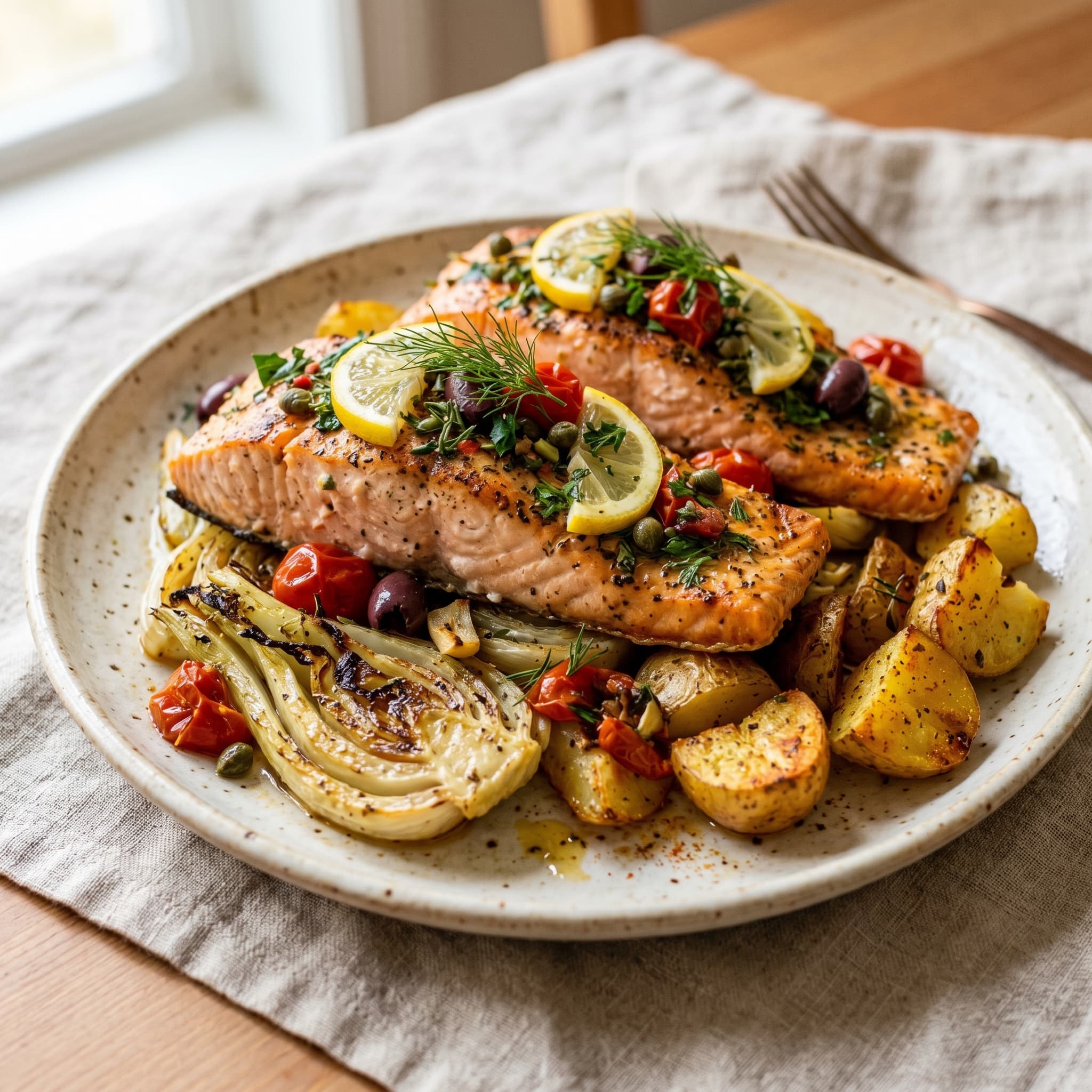
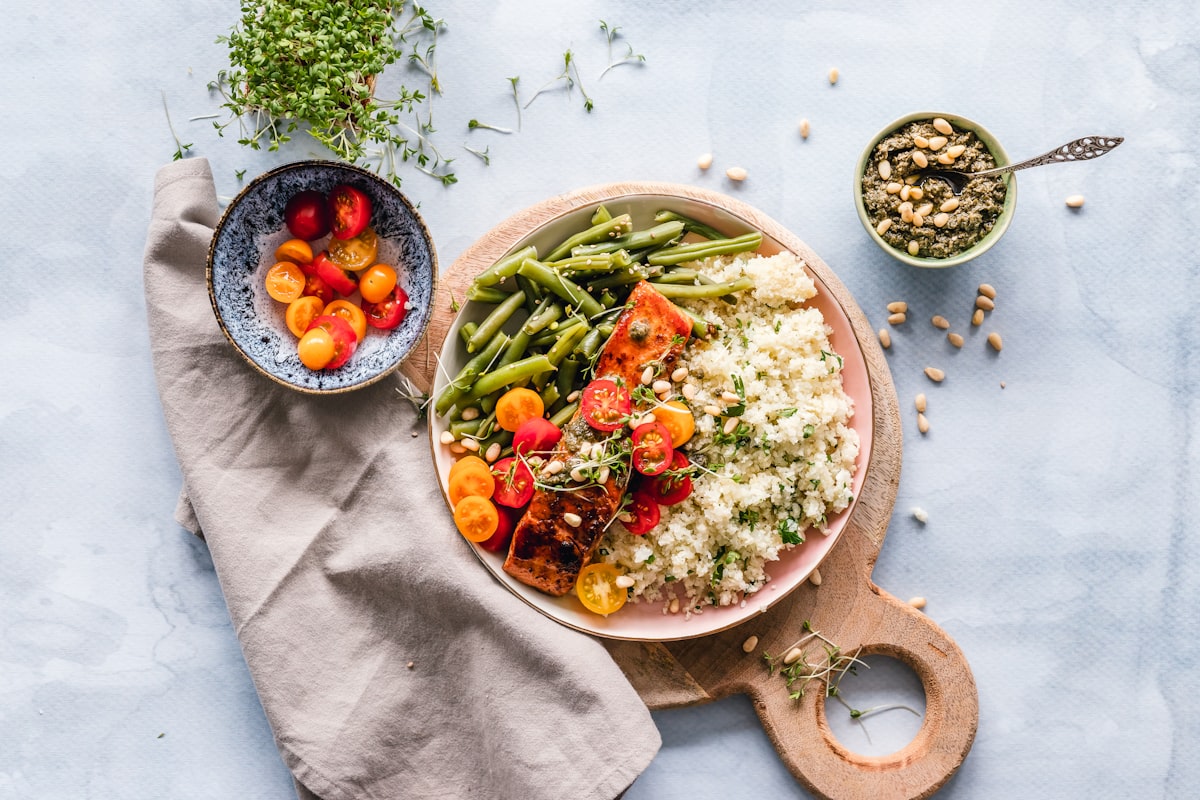
For a light and elegant Mediterranean dinner, our Low FODMAP Mediterranean Haddock with Fennel and Olives is perfect. It uses garlic-infused oil and fresh herbs to build incredible flavor without any digestive distress. If you're craving something heartier, the Low FODMAP Baked Salmon with Herbs served with quinoa is packed with protein and healthy fats.
And when you want something with a different flavor profile, our Low-FODMAP Chicken & Bok Choy Stir-Fry uses tamari, fresh ginger, and sesame oil to create a delicious Asian-inspired meal that's completely safe for the elimination phase.
Your first steps to a calmer gut
Feeling ready to explore this, but not sure where to start? I get it. Here's a simple, step-by-step plan to get you going on the right foot. This is your practical takeaway guide.
- Talk to a professional first. This is my most important piece of advice. Before starting any restrictive diet, it's so important to see a doctor to rule out other conditions like Celiac disease or IBD. Then, find a registered dietitian who specializes in digestive health. They will be your guide, your cheerleader, and your expert resource through all three phases.
- Download the Monash University FODMAP Diet App. Seriously, don't try to do this without it. It's the gold standard, created by the researchers who developed the diet. It has a simple traffic light system (green, amber, red) for thousands of foods and, crucially, it gives you portion size information. It's worth every penny.
- Start a simple food and symptom journal. This doesn't have to be complicated. Just a small notebook where you jot down what you ate, the approximate time, and how you felt afterward (bloating, pain, energy levels, etc.). This data will be invaluable when you get to the reintroduction phase.
- Stock your pantry for success. Set yourself up to win by having easy swaps on hand. Buy a good quality garlic-infused oil, stock up on rice and quinoa, grab some maple syrup to replace honey, and switch to lactose-free or almond milk. Having these ready to go makes a huge difference.
- Be incredibly kind to yourself. This is a learning process, not a pass/fail test. There will be moments of confusion or accidental slip-ups, and that is 100% okay. Every meal is a new opportunity to learn more about your unique body. Celebrate the small wins and give yourself grace.
This journey is about empowerment. It's about moving from a place of confusion and frustration to one of clarity and control. You're learning your body's unique language, and that is a powerful, life-changing skill.
You don't have to figure this all out overnight. The goal isn't perfection; it's progress. For today, just start with one small thing. Maybe it's looking up the Monash app, or maybe it's just grabbing a notebook to start that journal. Your journey to a happier, calmer gut starts with that single, gentle step.
Which foods are behind your symptoms?
A free 60-second check to help you narrow it down — plus recipes matched to what works for your body.
Find my food triggers